My Pituitary Adenoma (Tumor) Story

I was diagnosed with a pituitary adenoma in 2024 and I had surgery. It was benign, thank God. There was an article written about my story, which describes my experience well, but I also wanted to post my own version.
Here is the article UW Health wrote about my surgery:

Tony is grateful to see clearly now (uwhealth.org)
Tony’s severe vision loss was was cured by a multidisciplinary group of UW Health
providers who diagnosed and removed a pituitary tumor in his brain.
My aim is to help people who think they might have the symptoms I had. I would encourage you to get checked out, if you do. I think it took a long time to grow – maybe a couple years even. I did get my vision back and am back to normal now.
What Is a Pituitary Adenoma?

A Pituitary Adenoma is a noncancerous tumor that forms in the pituitary gland—a small, bean-shaped gland located at the base of your brain. Even though it’s small, this gland plays a big role in your body, controlling hormones that affect everything from growth and metabolism to stress and reproductive functions.
These tumors are typically benign, but their location makes them serious. The pituitary gland sits right near the optic nerves, so if a tumor grows large enough, it can press against those nerves and affect your vision. That’s exactly what happened in my case.
Common Symptoms to Watch For
The symptoms of a Pituitary Adenoma can vary depending on whether the tumor affects hormone production or simply grows large enough to cause pressure in the brain. Some people have no symptoms at all, while others experience a combination of these:
- Vision Changes – This is a big one. You might notice a narrowing of your field of vision (tunnel vision) or strange static-like effects around the edges. In my case, the sides of my vision were literally fuzzy and fading out.
- Headaches – Persistent or unexplained headaches can be a sign, especially if they’re centered behind the eyes or forehead.
- Hormonal Changes – Because the pituitary gland controls so many hormones, you might notice issues like unexplained weight gain or loss, fatigue, mood changes, irregular periods, low libido, or even unexpected lactation.
- Fatigue and Weakness – Low energy despite good sleep could be a subtle warning sign.
- Dizziness or Balance Issues – Some people experience lightheadedness or trouble keeping their balance.
My Experience
For me, the most noticeable symptom was my vision. I started realizing that my peripheral vision was basically gone—it felt like looking through a tunnel, and the edges were just… static. It’s hard to explain, but it wasn’t just blurry—it was like the sides of my vision didn’t exist anymore. And, even looking at grass, it was just blurry instead of individual blades of grass. When looking at a computer monitor with black text on a white background, the text kept changing colors. There was like a green then amber then black color-changing effect.
I had another, strange symptom going on as well, which turned out to be unrelated, but all of that combined is what got me to go in and get an MRI over at MH Imaging here in Madison. The results went to my doctor and a neurologist looked it over. They ended up escalating those imaging results to Dr. Ahmed at UW Health. We then met and went over my options.
That was in May of 2024 and the surgery got scheduled for August 6, 2024, so I had a few months. During that time, my vision slowly got worse. By the time surgery came around, it was getting very cloudy in front of my eyes. A visit to Dr. Chen confirmed the diagnosis. She said that if I did not get the surgery, I would eventually go blind. I believed that. It was difficult to hear, but I had faith in God and in the medical team forming around me.
I can remember a few specific times before surgery how my hormones were getting out of whack (because of the tumor tissue around the pituitary). I went on a short canoe trip, and I had all my stuff back at shore, waiting to go into the car, and that task just seemed overwhelming. I’ve done it a few dozen times before, but this time it was a huge mountain. I had to take a break and calm down. The other time was in a Walmart where the aisles were small. There were too many people there and that was overwhelming for me at that point, as well. So, yeah… hormones are real, folks.
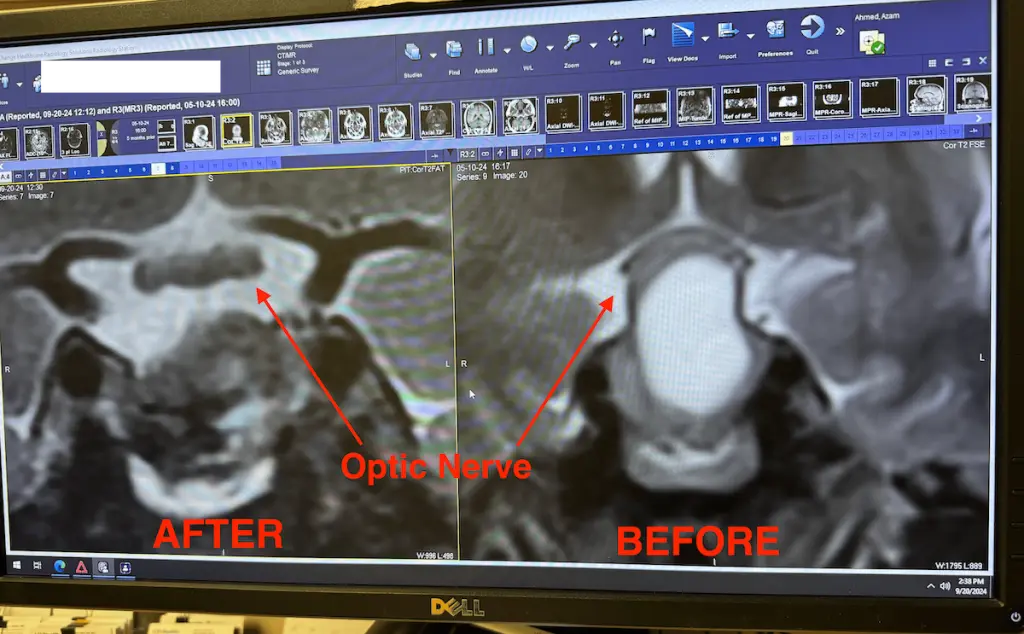
Optic Nerve Stretched
The problems with my vision was due to the tumor stretching my optic nerve. In the MRIs (below) you can see it straight across like it should be, and you can see it curved, which is what the tumor tissue was doing:
Field of Vision
Here’s the before and after of my field of vision:
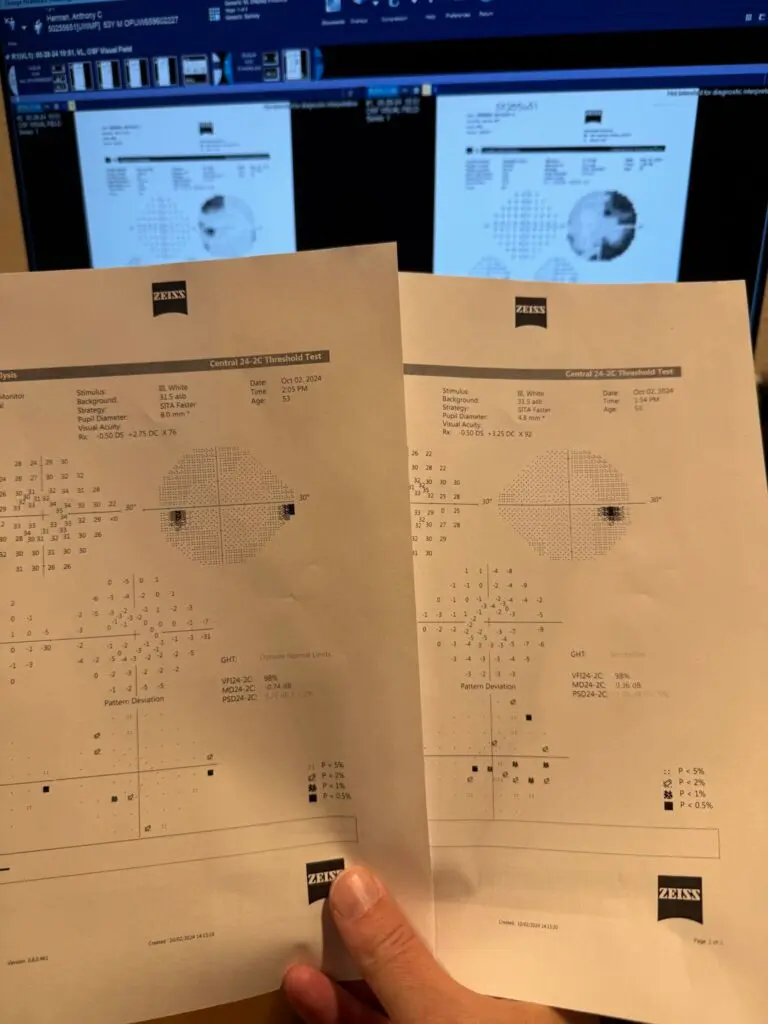
On top is before and below is after. The black spots represent what I could not see too well. On the bottom, I think those spots were there because of the lens in the machine maybe.
Surgery
Finally, once surgery arrived, the team there were absolute professionals. They had this down, you could tell. Later on, the nursing staff in the Neuro ICU were surprised I was local because I guess people would come in for Dr. Ahmed from all around the country. I got prepped in a bed, I was rolled in, they were talking, and then I faded out.
I woke up I guess about 4.5 hours later in a recovery room. I remember I was dreaming and it was difficult to choose whether to stay in the dream or wake up, but I woke up and realized where I was. I instantly noticed my visions was back! Wow! That was amazing. They soon rolled me up to my room i the Neuro ICU. This is a different section of the hospital. It has security to get in. It’s kept cooler because that’s better for the patients. The walls were darker. The lighting was dimmer. It was also pretty quiet and the medical staff there was very calm. You could tell they were chosen for this area.
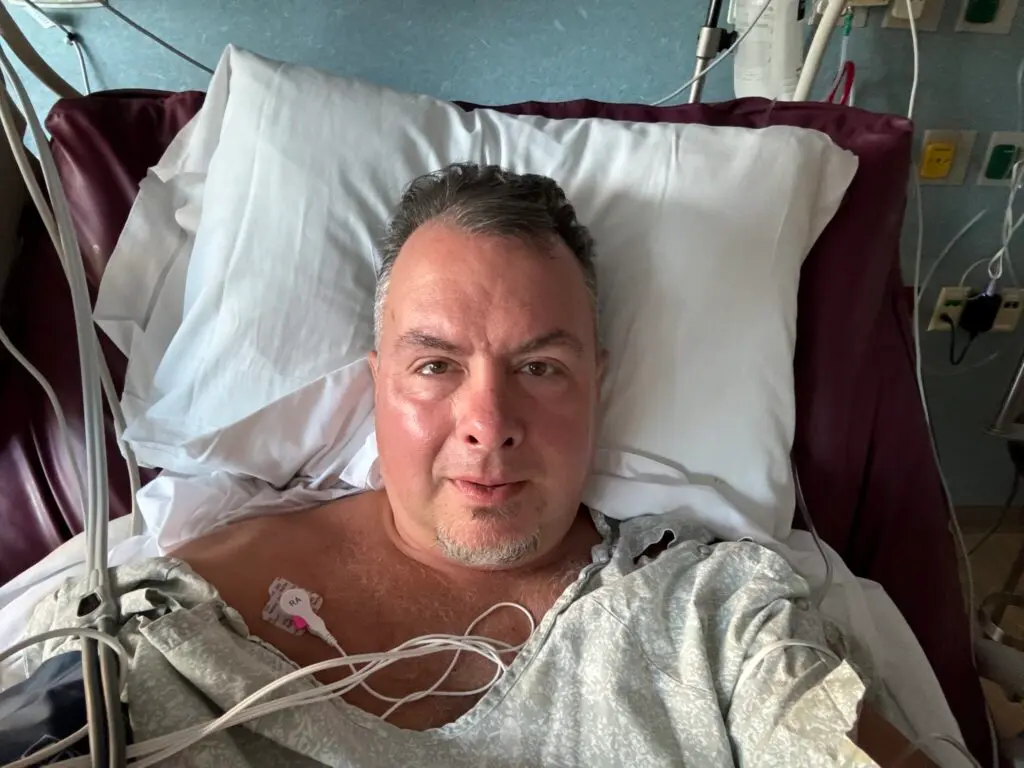
They went in through my nose, so I was breathing through my mouth – like, if you had a cold, basically. I had a few tubes and devices hooked up to me. Every half hour the nurses would check on me, usually asking if I knew where I was, who I was, and why I was there. I had some food. My mom was there with me. She eventually left and I could try to sleep, but they had to wake me up every hour or half hour, so I didn’t get much sleep. I had another MRI at midnight (I didn’t know they did them that late, but they do) to check where things were at. They had the results in a short bit and it sounded like they got most of it, which is great. When I close my eyes now, I see a slight amount of residual “static” but it’s nothing compared to what I had, and it’s really not noticeable.
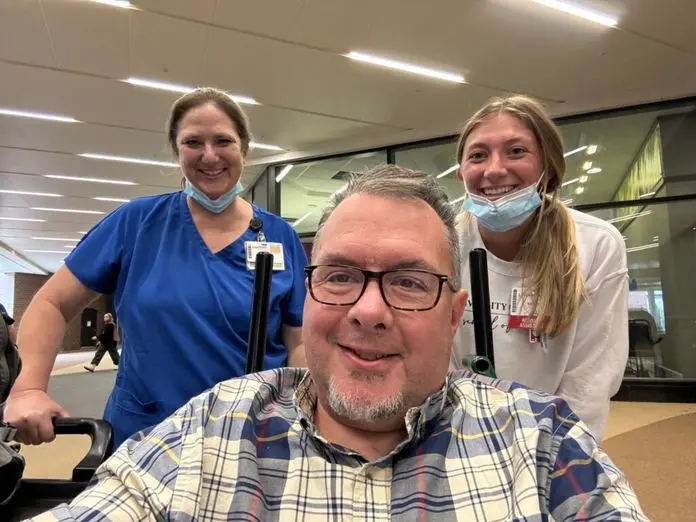
I stayed two nights and left on the third day. I had some CNAs come in and do things like take me for a walk. Yeah, my vision got abruptly better, and since I had been compensating for bad vision over time, I sort of had to learn to walk again – or at least how to make the needed adjustments.
Recovery
I had to keep my head up and not face down or put pressure on it, like from lifting anything over 10-20 lbs. I slept with a wedge on my bed, which wasn’t too bad actually. I had to flush my nose. I also had to rest, of course. Total recovery was the full 6 weeks. I took 5 weeks off of work, and then decided to take off 1 more week, and I needed it.
There was a flurry of appointments to go to. One was to get the packing out of my nose (not fun). I followed up with the Neuro-Ophthalmologist as well. I kept trying to walk further every day if I could – some days it didn’t happen. But, my vision came back fully, thank God. Hormones came back to normal, but that took a little more time for my testosterone.
I also had lots of friends come by or send food, which was great – less work. I had so much support – thank you all!
God got me through this. I know I had lots of people praying for me and Jesus by my side. It was rough at times, but I could see things going my way. And, it’s good to have some tough times in life because you better appreciate the good times. My mom really helped me as she stayed with me during recovery. She paid for my first MRI, too, which is how we found out what was really going on. Lots of people brought over food for us. That was so nice – such a blessing. I learned a lot and better understand what people in the hospital go through.
And, I better learned that I can rely on other people and that many friends are so willing to help. I usually don’t ask for much, as I don’t want to bother anyone, so asking for help with a few things put me in the humble position I needed to be in to just receive. Thanks for the food and help, everyone.
Conclusion
Thankfully, I got it checked out, and I’m fine now. But the key is not waiting too long. If you’re noticing anything like this—especially vision changes—go see your doctor or an eye specialist. An MRI can confirm what’s going on, and the sooner you know, the better the outcome.
FAQs About Pituitary Adenoma and Surgery
How long is the hospital stay for pituitary tumor removal?
Most patients stay in the hospital for 1 to 3 days after surgery. If the procedure is minimally invasive (through the nose), recovery is typically faster. However, more complex cases might require a longer stay for observation.
How painful is pituitary surgery?
Pain after pituitary surgery is usually manageable and less severe than people expect. Since many surgeries are performed endoscopically through the nose, discomfort is more likely to involve sinus congestion and mild headaches rather than intense pain. Most patients recover with standard pain medications.
What is the most common age for pituitary adenoma?
Pituitary adenomas are most commonly diagnosed in people between the ages of 30 and 50. However, they can occur at almost any age. Early detection is key to avoiding long-term complications, especially with vision.
How much does pituitary surgery cost?
The total cost of pituitary surgery can vary widely depending on the hospital, surgeon, and insurance coverage. Without insurance, it can easily exceed $100,000. My personal experience hit around $190,000 total with insurance involved. Even the initial MRI I paid for out-of-pocket was $650, so costs add up quickly. I had to pay around $7k out of pocket.
Will I get my vision back after removing a pituitary tumor?
In many cases, yes—vision improves after the tumor is removed, especially if it’s caught early, but that is not guaranteed. The pressure on the optic nerves is relieved, and over time, peripheral vision often returns. I personally experienced significant improvement after surgery, but results vary based on how long the vision was affected before treatment.
What can you not do after pituitary surgery?
After surgery, patients are typically advised to avoid heavy lifting, bending over, blowing their nose, and any activity that increases pressure in the head. Recovery also involves avoiding strenuous exercise and following specific post-op care instructions to prevent complications like cerebrospinal fluid leaks.
What happens if you sneeze after pituitary surgery?
Sneezing can be risky right after surgery, especially if done forcefully through the nose. Doctors usually advise sneezing with your mouth open to reduce internal pressure. Forceful sneezing could disrupt healing or, in rare cases, lead to complications like a CSF leak. Follow your surgeon’s guidance carefully during recovery.