Do you have your topic chosen? You should. How does it feel? Are you getting excited yet?
Today is about doing a little research to make sure your topic/niche is good and then to start coming up with 3-4 main categories within that topic.
What About the Website?
You may be wondering when we’ll get to setting up the website and that’s tomorrow. We have to first choose a topic because we’ll need to know what that topic is before buying a domain name, which is what we need to do in order to set up a website.
The Next Step: Planning Your Initial Content
When building this kind of website, you’ll need to narrow down your topic/niche. Just doing a website about photography (in my example) is too big. It’s been done before and that means there’s going to be a lot of competition. You shouldn’t be afraid of too much competition because that means there’s money there but we want to start small for a few reasons.
We’ll continue this in a minute but I first want to make sure you understand something important…
How Google Works
Before we get too deep into keywords, I think everyone should understand how Google works. If you know this already, then go to the next section, that’s fine.
When I say “Google” I mean all search engines. Right now, Google’s the king and that’s the search engine that is the leader and the one that has been studied the most so that’s the one we focus on in this industry. I actually find it’s easier to rank for Bing, which is good, but back to my lesson…
Google needs to give the best results. That’s how they stay the king. It really wouldn’t take long for Google results to stink before people would move to another search engine. That’s actually a lot of pressure and that’s why they’re constantly changing how their search algorithm works. They improve it every day.
What Google does is send out “spiders” to websites (sometimes they’re called “bots” or “robots” too). I see their footprints all the time in the server access logs. You can tell when they’ve been to your website if you look. Anyway, these spiders crawl and read (consume) all the content on your website. They then take it back to Google and report what they read and saw. Google then takes that information and puts it in a database, which is called the “index” because it’s much like an index at the back of a textbook.
When someone does a search, Google shows results based on all the crawling it did and how its algorithm says to rank things.
About 25% of the searches done in Google have never been done before. That means Google needs to come up with results right away and that’s why the spiders come to your website – to gather information so that Google can give results on just about anything.
Where am I going with this? I’ll tell you…
The way to lots of traffic to your website isn’t really the most popular searches. Sure, you can get there but on you way, you want to start ranking for the searches that don’t have competition and dip into that 25% that Google hasn’t seen before. The way to do that is with what we call long tail keywords and having lots of content.
Long Tail Keywords
If you were to search for something like shoes, you know enough to just not type in “shoes” right? You know that if you do that, you’ll get too many results. You instead type in more keywords like “mens new balance black athletic shoes” because that will get you exactly what you want. Or you might ask Google a question like “what are the top running shoes for men?” In each of those two phrases, count the number of words. It’s 6 and 8. That is long tail because it’s a lot of words. There’s less competition to rank for searches that have a lot of words because they’re more specific.
Less competition is good for a few reasons. First, it’s easier to rank for those keywords. Second, when someone uses a lot of words when they search, they’re getting specific and when your result comes up for that specific search, they’re ready to click it and find out more. The person searching feels like they just found gold because their exact search came up.
Another reason going for long tail keywords with low competition is good is because when your website comes up for that and you deliver a good result, Google sees it and they trust you more. This happens because Google is obsessed with having the best results. They measure how long someone lingers (stays) on your page or if they quickly bounce off your page and go back to results. When you keep someone on your website, you make Google look good and they reward you by trusting your content more.
When you have great content, the website visitor (you know… people) trust you more and want to share your content on social media or wherever. This also makes your website look more trustworthy and more of a resource and that makes your website more of an authority on your topic/niche.
Whew! You still with me?
I wanted to make sure you knew how all of this works and why we’re going to try to find keywords that are longer and aren’t searched too often (low competition). We’re going to integrate a lot of them into the content that we write.
If you think of the content on your website as a tree, then at the bottom there will be a lot of low hanging fruit. Going up, there are less branches until you get to the very top where there’s just one branch. I guess that’s more of pine tree analogy. Anyway, the top of the tree is the topic we’ve worked on so far. We now need to kind of work backwards – from the bottom of the tree so that we can build content the goes up toward our large keyword. We do this with keyword research.
We’re going to pick a sub-set of what you main keyword is. We can always add more top keywords later, so don’t worry about that. You’ll get there eventually but let’s work on the searches you can start ranking for sooner so that you make money sooner.
Easy Keyword Research
There are a lot of keyword research tools/websites out there in the Internet Marketing industry. It seems like every week there’s a new one coming out. Well, there’s one that’s the most popular and Google actually owns it. Since we’re trying to rank well in Google, why not just use that one? It’s also free.
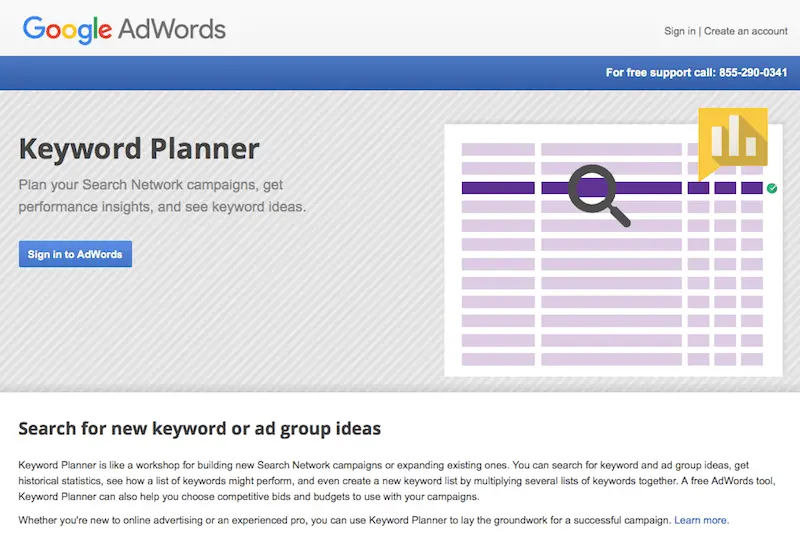
It’s connected with Google AdWords where you would work on ad campaigns to run ads on Google, so you’ll need a Google account and you’ll need to sign up with AdWords but you’re not actually going to be buying ads.
Once you’re in, you should see a screen like this:
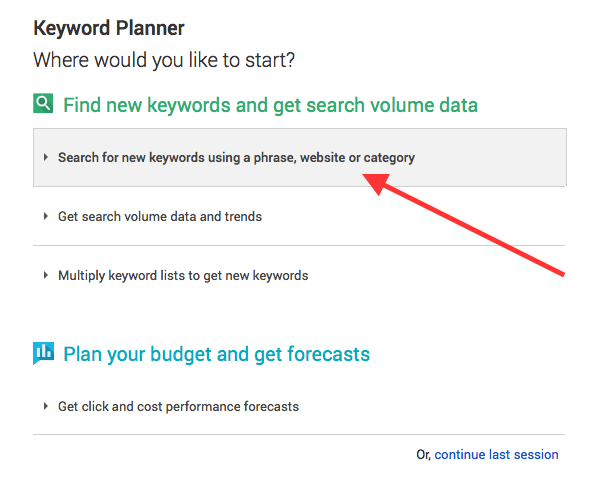
And you’ll want to click where I’m showing you.
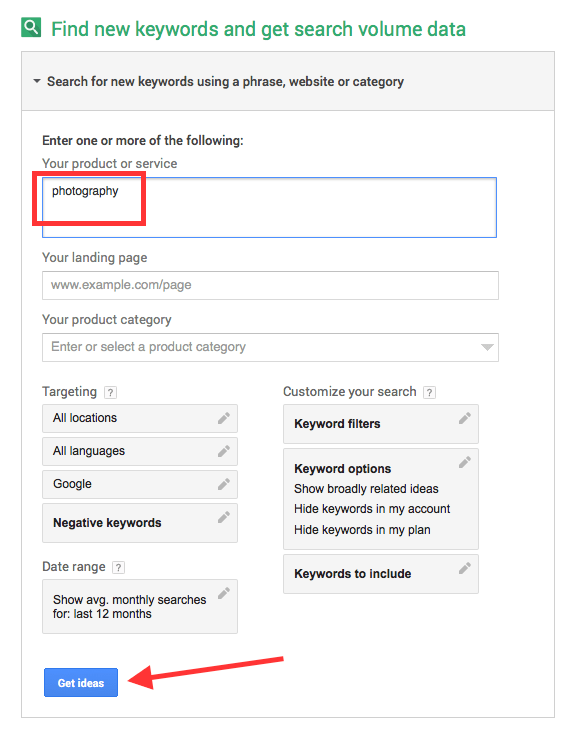
Put in your keyword and click “Get Ideas” like I show here:
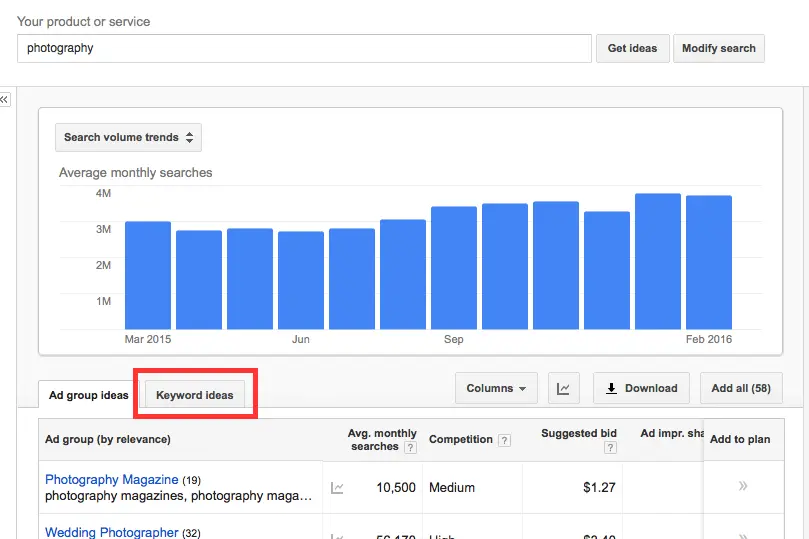
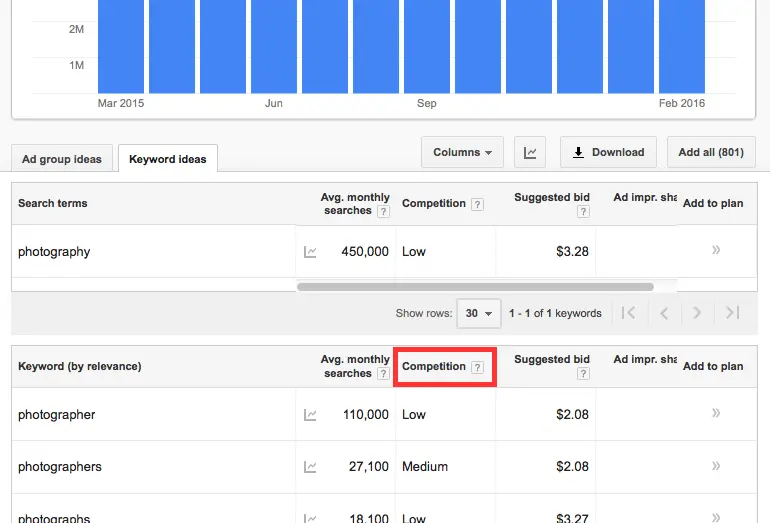
It’ll load and then click on the “Keyword Ideas” tab:
And then sort by competition by clicking where it says “Competition.” It first shows by relevance, so you’ll click “Competition” once and get the high competition keywords, so click it a second time so that you get the low competition keywords showing – like this (sometimes you have to wait for it to load):
Ok, so now what you’ll do is start looking through all the keywords until something good sticks out. This means something you’re interested in. We’re just brainstorming here.
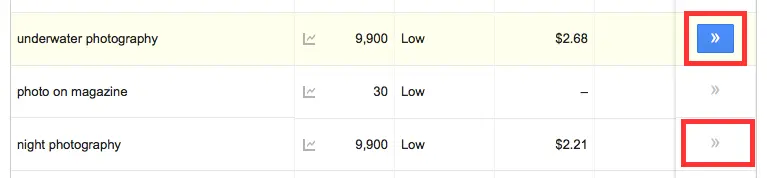
I found two that I like: “underwater photography” and “night photography” so I clicked the arrow on the right to add each of those to my list (when you mouse over it, you’ll get the arrow):
There Are Two Roads
From here, there are kind of two roads. If there are a lot of average monthly searches for the keywords you’re finding, then you want to find maybe 10 of them. If there aren’t a lot of searches, then go find about 40.
With my example, 9,900 searches (broad) is considered a lot for our purposes. Somewhere around 1,000 or less would not be very many. If you find searches with 10 or 20, that’s perfectly fine – you can keep those.
So either you’re building that list of 40 or so keywords with not many searches or you’re first coming up with a list of 10, which you’ll put back in and dig deeper with.
We’ll continue with my example and I’ll get 10.
Here they are (number of searches is in parens):
underwater photography (9900)
night photography (9900)
creative photography (8100)
engagement pictures (6600)
people photography (2900)
outdoor portrait photography (1000)
digital photography basics (880)
fine art portrait photography (480)
outdoor family portraits (320)
photographing photos (30)
I ordered them from most to least.
So I still want to work on my list until I get about 40 keywords that are 1,000 searches per month or less.
What I’ll do is put “underwater photography” back into the search at the top of the page and dig deeper into that one. I’ll do this for the first 5 on my list.
Start to hone in on some common keywords. Remember to think about how you’re going to monetize your website, so think in terms of products or how to do things. Your articles are going to help people solve a problem. Do not pick keywords with any years in them since that’s too trendy. Try to think of the intent behind searches – when people put those words in, what do you think they were really trying to find?
My Results
Ok, so I started going through them and digging in and I found two themes that kind of started to emerge. One is “how to take photos at night” and the other is “which underwater camera to buy” – I think they’re both good. They both kind of go together because you’re not just snapping a photo in the day but they’re odd or different situations for shooting photos. They’ll take some skill and people always want tips on how to do this kind of photography.
I came up with 37 long tail keywords that I’ll use for my website:
star photography settings (590)
taking pictures at night (260)
how to take photos at night (260)
camera settings for night photography (210)
diving photography (170)
best settings for night photography (110)
photographing the stars (110)
first underwater camera (70)
camera setting for night photography (70)
underwater imaging (50)
amazing underwater photography (50)
best underwater photographers (50)
beautiful underwater photography (40)
amazing night pictures (40)
best iso for night photography (40)
photographing photos (30)
ideas for night photography (30)
best compact camera for underwater (20)
how to take long exposure photos at night (20)
best dslr night photography (20)
taking pictures of stars at night (20)
camera setting for night shots (20)
shooting pictures at night (20)
taking photos of lights at night (20)
the best rugged camera (10)
best compact underwater camera 2014 (10)
best waterproof camera on the market (10)
what underwater camera to buy (10)
night shot tips (10)
amazing good night photo (10)
taking city photos at night (10)
taking photos at night with a dslr (10)
what iso for night shots (10)
taking pictures of lights at night (10)
what to photograph at night (10)
tips for photographing stars (10)
stars night pictures (10)
So that’s my list. I mean 10 searches a month doesn’t seem like many and you wonder how we’ll make money but don’t worry about the number of searches. We just need topics right now. There are plenty of keywords we’ll use and when we combine them all, we’ll rank for lots of keywords and Google should love our website.
Homework
Do what I just did. Dig around until you find a few topics that interest you and seem right. This is just the start of our website, we’ll go back and do this process whenever we need more ideas for things to write about. We can’t do it all at once, so we’re taking it in pieces.
Tomorrow, we’ll use this information to choose a domain name and then set up our website!