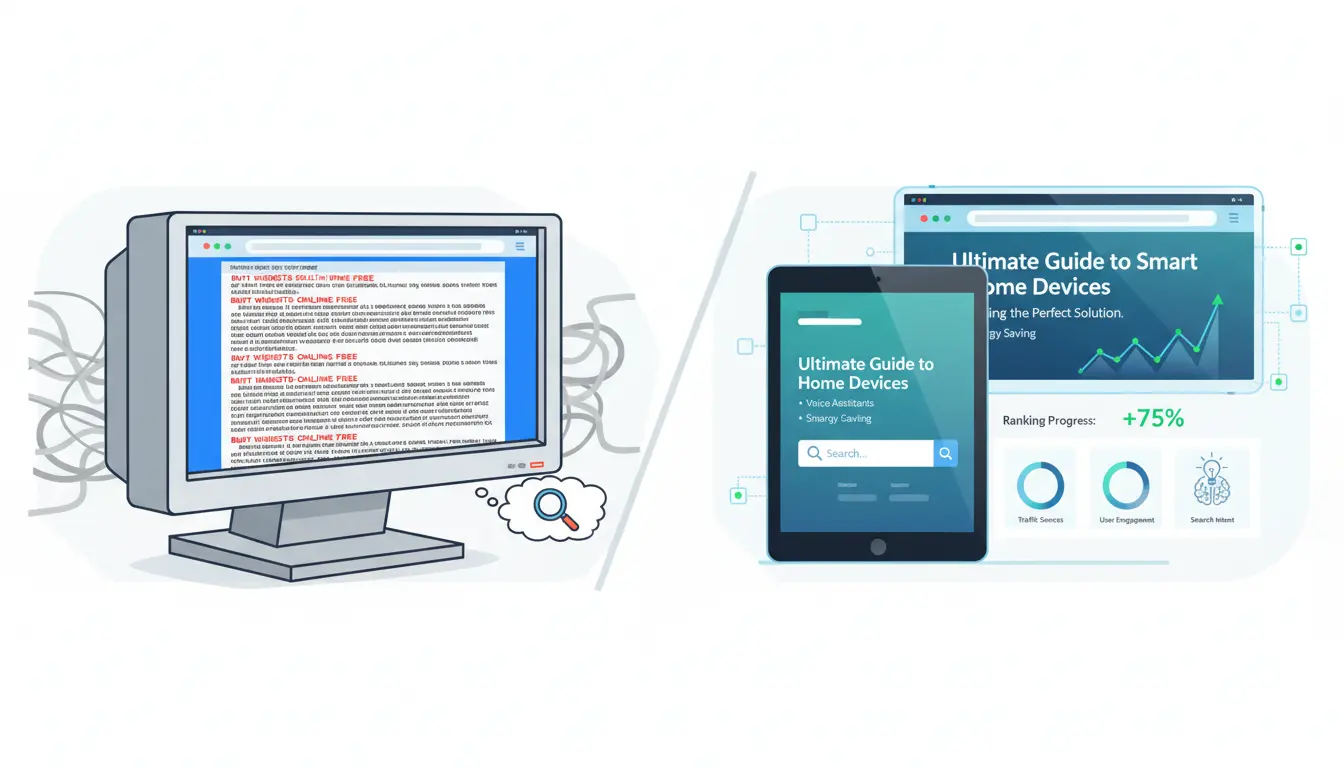
How Has SEO Changed From 2011 to 2026?

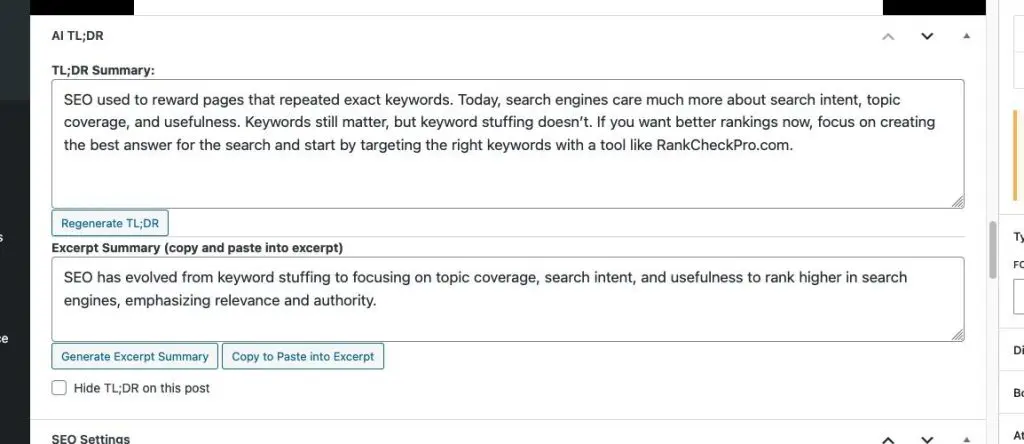
TL;DR Summary: SEO used to reward pages that repeated exact keywords. Today, search engines care much more about search intent, topic coverage, and usefulness. Keywords still matter, but keyword stuffing doesn’t. If you want better rankings now, focus on creating the best answer for the search and start by targeting the right keywords with a tool like RankCheckPro.com.
A lot of people still think SEO works like it did 10–20 years ago: pick a keyword, repeat it a bunch of times, publish a short page, and wait for rankings.
That used to work a lot better than it does now.
SEO has changed in a big way. Search engines are much better at understanding meaning, context, and intent. They’re also much better at spotting thin content that was written just to rank.
If you’re still using old-school keyword formulas, you’re not crazy. A lot of us learned SEO that way (I was in a group that did very well with the old methods). But today, the best results usually come from building pages that are genuinely useful, specific, and complete. If you can add your own case studies and research, that’s ultimately what search engines want.
Let’s break down what changed, what still works, and how to adapt without making SEO harder than it needs to be.

What SEO Used to Look Like
Older SEO strategies often looked like this:
- Find a keyword phrase
- Use that exact phrase in the title
- Repeat it several times in the body
- Keep the article short
- Publish lots of pages fast
Back then, search engines relied more heavily on exact matches and simpler signals. So if someone searched for “best homes in Madison WI” and your page repeated that phrase five times, you had a decent shot.
The problem is that this created a lot of low-quality pages. Search results got cluttered with content that technically matched the keyword, but didn’t really help the person searching.
What Changed in Modern SEO
Modern SEO is less about keyword repetition and more about topic coverage + search intent + usefulness.
Search engines can now do a much better job understanding what a page is actually about, even if you don’t repeat the exact phrase over and over.
That means a page can rank because it:
- Answers the real question behind the search
- Covers related subtopics naturally
- Includes clear examples, steps, or comparisons
- Shows experience or local knowledge
- Provides a better user experience than competing pages
In other words, SEO moved from “keyword formula” to “best answer wins” (or at least best answer among pages Google can understand and trust).
What Still Works and Always Will…
Here’s the good news: some of the old advice is still valid. Keywords still matter. Titles still matter. Relevance still matters.
The difference is how you use keywords now.
What still works:
- Choosing the right keyword/topic before writing
- Using the keyword in important places (title, headings, intro, meta description)
- Writing clearly around the topic in natural language
- Matching the intent (informational, local, commercial, etc.)
- Updating content when it gets stale
So yes, keywords are still part of SEO. They just aren’t a magic trick anymore.
What to Do Instead of Keyword Stuffing
If you want better SEO results today, write pages that make it easy for both people and search engines to understand what you offer and why it matters.
A better approach looks like this:
- Start with a real search phrase people use
- Figure out what they actually want when they search it
- Create a page that answers that need completely
- Add related questions and subtopics
- Use examples, proof, screenshots, local details, or experience
- Make the page easy to scan with good headings and formatting
For example, if someone searches for a local service, they may not just want a definition. They may want pricing, service area info, timelines, FAQs, and proof that you actually know what you’re doing.
That’s where a lot of websites miss the mark. They target the keyword, but they don’t fully answer the search.
The Simple Version
SEO changed from:
- Exact keyword repetition
to:
- Intent-matching, useful content, and strong topic coverage
If you understand that shift, you’re already ahead of a lot of websites.
SEO Today is More About Relevance and Authority
Another major shift is that SEO now rewards websites that build topical depth over time.
One page can rank, sure. But a site that consistently publishes helpful content around a topic often performs better because search engines can see a pattern of relevance.
That doesn’t mean you need to publish fluff every day. It means your content should be intentional. Fewer pages with more value is usually better than a pile of thin posts.
This is especially true now that AI tools and search features are surfacing answers faster. If your page is generic, it gets skipped. If it’s specific and useful, it has a much better chance.
Want Better SEO Results? Start With Better Keywords
If you want to improve rankings, traffic, and leads, the first step is choosing the right keywords for your website.
That’s exactly why I built RankCheckPro.com. It helps you find better keyword opportunities, track where you rank, and focus your SEO efforts on terms that actually matter for your business.
If you’re tired of guessing what to target, go check out RankCheckPro.com and start finding the best keywords for your website.
And Conversion Matters – Give People What They Want
This is also key… get to the point, like right away.
It’s best to add a TL;DR (Too Long; Didn’t Read) summary at the beginning of each blog post. This will help people understand the main points of the blog post before reading the entire content. Many people prefer to read the content first, and a TL;DR summary will help you increase user engagement.
The importance of adding a TL;DR section is also increasing in AI-powered search engines and AI assistants. AI assistants analyze the content of a webpage and provide a short summary of it in their answers. A clear TL;DR section will help AI assistants quickly understand the main points of the content, and there is a high probability of referencing your webpage in their answers.
I wrote a plugin that uses AI to help me write TL;DR sections with just a click:
What Do You Think?
Give me your comments below.
📄 Download a PDF of This Article