How to Get Powerful Backlinks to Your Website

TL;DR Summary: Backlinks work best when they point to content that fills real gaps in Google’s results. Start with low-difficulty keywords, create a best-in-class resource (data, calculator, checklist, or visual explainer), and promote it with targeted, respectful outreach (link intersect, unlinked mentions, resource pages, broken link replacements). Paid backlinks can help if used carefully—relevance, quality pages, and diversity matter. Track referring domains, rankings for target queries, and referral traffic. Repeat a 4-week sprint every quarter.
- Backlinks still move the needle, but “powerful” doesn’t just mean high Domain Rating.
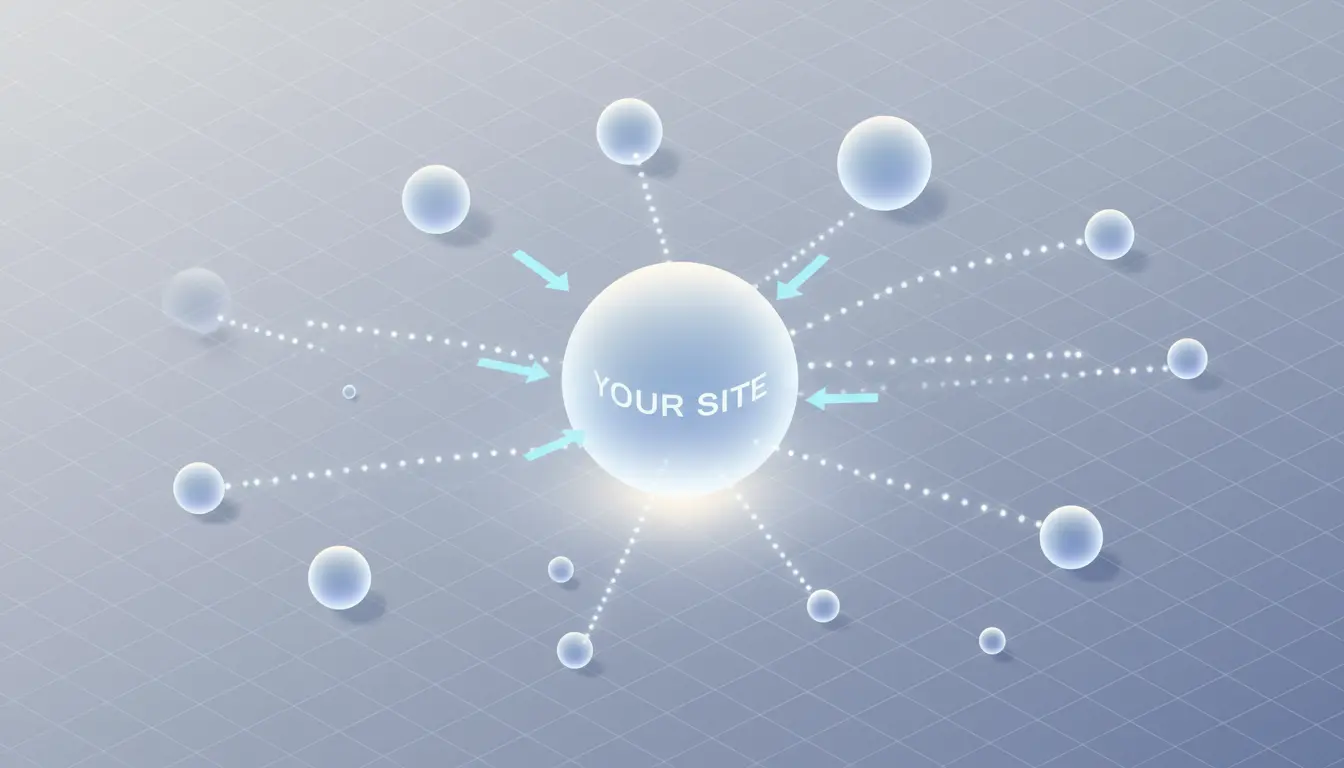
- The best links point from relevant pages that real people read, using natural anchor text, and they land on content that deserves to rank.
This guide shows you how to earn those links by creating link-worthy content, aligning it with your keyword research, and using a simple outreach system that actually works.
What Makes a Backlink “Powerful”?
- Topical relevance: From pages/sites your audience already trusts in your niche.
- Page-level authority: The linking page gets traffic and has links of its own.
- Placement: Naturally placed in the body (not in footers/sidebars).
- Anchor & surrounding text: Reads like a human recommendation, not a keyword dump.
- Indexation & traffic: The linking page is indexed and actually visited.
- Stability: The link is unlikely to be removed or noindexed later.
Why Powerful Links Start With Smart Keyword Research
If a page solves a real search problem, it earns links more easily. That’s why your backlink plan should start with low difficulty keywords and “Google gaps.” These are queries where:
- Results are thin, outdated, or off-target.
- Searchers clearly want something specific (check People Also Ask and related searches).
- You can create a best-in-class answer without 6 months of production.
By publishing the missing resource first, you help Google fill a gap. Do this consistently and Google learns your site is a reliable problem-solver—which lifts rankings across the board.
A Repeatable Process for Earning Links That Gain Trust
Step 1: Find “Google Gap” opportunities
Use RankCheck Pro to run a report on your domain and find good keywords with low keyword difficulty.
- List 10–20 low-difficulty, specific queries tied to your core topics.
- Open the SERPs and evaluate: What’s missing? Data? Step-by-step instructions? Local context? Visuals?
- Note broken/outdated pages and weak “listicles” that don’t actually teach.
Step 2: Plan a resource people want to cite
Choose a format that matches the gap:
- Original research: A small dataset or poll, summarized with charts.
- Calculator/checklist/template: A practical tool others can embed or reference.
- Visual explainers: Clear diagrams that simplify a tricky concept.
- “Field manual” guides: Opinionated, step-by-step, no fluff.
Step 3: Ship a 10/10 page
- Lead with the answer, then show the work (examples, screenshots, math, sources).
- Use clear H2/H3 structure so skimmers can link to specific sections.
- Add internal links from related posts so PageRank flows to this resource.
Step 4: Promote deliberately (ethical, repeatable)
- Link intersect sweep: Export the referring domains of 3–5 competing resources; pitch those sites a better, fresher source.
- Unlinked mentions: Search your brand/product without a hyperlink; request a polite add.
- Resource pages: “Best guides/tools on X” pages love high-utility links.
- Broken link building: Offer your live guide as a replacement for dead URLs.
- Journalist queries: Provide quick, quotable stats or a chart from your research.
Simple Outreach Template (customize before sending)
Subject: Quick resource update for {{Page/Article Title}}
Hi {{Name}},
I was reading {{their page}} and noticed you reference {{topic}}. We just published a {{data-driven guide / checklist / calculator}} that fills {{specific gap}}. It includes {{1–2 concrete highlights}}.
If you think it helps your readers, here’s the link: {{URL}}. Either way—great piece, I bookmarked it.
Thanks,
{{Your Name}}
Paid Backlinks: Yes, They Can Work but Use Judgment
Reality check: paid placements exist—editorial fees, sponsored posts, and similar arrangements. They can help you kickstart referring domains if you’re selective. Keep it clean:
- Prioritize relevance: Niche fit beats raw metrics.
- Vet pages, not just domains: Is the page indexed? Does it get traffic? Will your link be in the main content?
- Go slow and diversify: Mix in earned links, branded anchors, and different sources.
- Track outcomes: Rankings and referral traffic matter more than DR.
Note: I do promote an affiliate program related to paid placements. No hard sell here—just acknowledging that paid links, used carefully, can complement an earned-link strategy.
Anchor Text & Internal Linking: Quiet Force Multipliers
- Keep anchors natural: Mostly branded, URL, and partial-match; avoid patterns.
- Earn citations to the resource page: Don’t try to force anchors—let editors write them.
- Build topic hubs: Internally link related articles to your flagship resources.
- Surface deep assets: Add contextual links from high-traffic posts to new guides.
Link-Worthy Content Ideas You Can Ship This Month
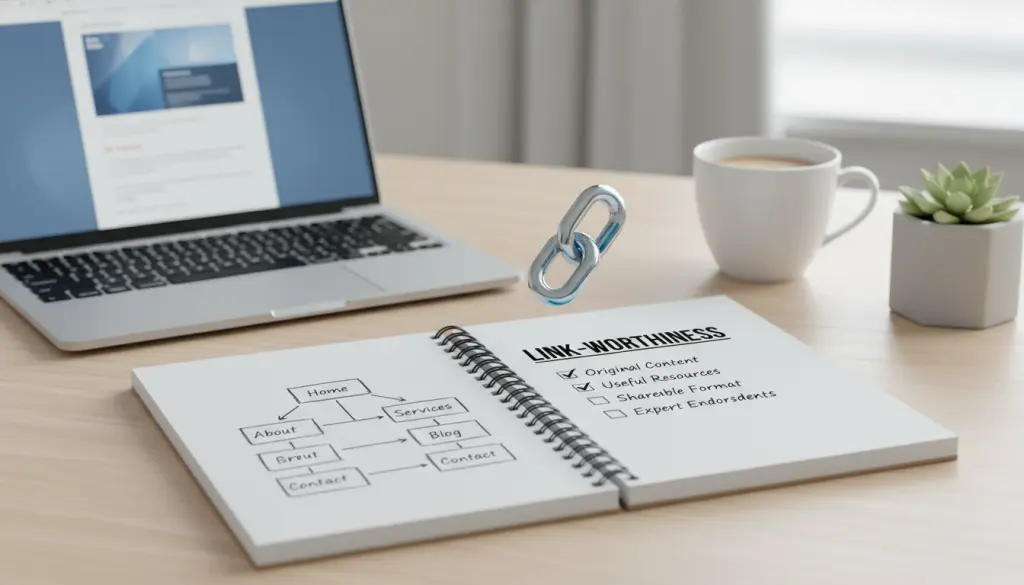
- Mini study: Aggregate public data, add one unique angle, and chart it.
- Industry glossary: Define 50 terms with examples; keep it non-generic.
- ROI calculator: A basic spreadsheet or on-page calculator people will reference.
- “What to do when X breaks” handbook: Triage steps + decision tree.
- Vendor comparison with criteria: Transparent scoring + downloadable checklist.
4-Week Backlink Sprint (Repeat Quarterly)
Week 1: Research & Plan
- Pick 5 low-KD “gap” keywords and define the missing content.
- Outline 1 flagship resource + 1 supporting checklist.
Week 2: Create
- Draft, add examples, build a small dataset or calculator.
- Publish with clean H2/H3s, table of contents, and internal links.
Week 3: Prospect
- Run link-intersect, broken-link, and resource-page prospecting (aim for 80–120 qualified targets).
- Collect names, emails, and “why this fits their page” notes.
Week 4: Outreach
- Send 10–15 highly personalized emails per day.
- Log replies, add quick customizations, and follow up once after 7–10 days.
Measure What Matters
- Referring domains per page: Are your flagship resources attracting links?
- Keyword movement: Track rankings for your target “gap” terms.
- Referral traffic: Good links send visits, not just metrics.
- Assisted conversions: Did visitors from links explore or subscribe?
Common Mistakes to Avoid
- Chasing DR alone: A relevant DR 25 link from a read page can beat an irrelevant DR 70 sidebar.
- Publishing “me-too” listicles: If readers learn nothing new, editors won’t link.
- Over-engineering anchors: It looks unnatural; let editors choose the wording.
- No follow-through: One outreach day isn’t a campaign—run the sprint.
FAQs About Getting Good Backlinks
Q: How many links do I need?
A: Enough to compete with the top ranking pages. Sometimes that’s 0–3 great links if your content fills a real gap.
Q: Are directories or profiles worth it?
A: They’re fine as a baseline for NAP consistency and discovery, but don’t confuse them with editorial links.
Q: Should I disavow?
A: Only if you clearly have spammy, manipulative links and a manual action risk. Most sites don’t need routine disavows.
Wrap-Up
Powerful backlinks follow powerful content. Start with low-KD gap keywords, build resources that truly help, and promote them with a light, respectful touch. Do this consistently and Google will see your site the way your readers do: a go-to problem solver worth ranking.
📄 Download a PDF of This Article