Affiliate Marketing Traffic Secrets Revealed (No Magic Wand Needed)

Why Traffic Is the Lifeblood of Affiliate Success
How to get traffic on affiliate website is the #1 challenge for affiliate marketers. Until people visit, even the best offers will never pay a commission.
| Top Ways to Get Traffic to Affiliate Websites |
|---|
| 1. SEO & Content – helpful posts, reviews, comparisons |
| 2. Social Media – share where your audience already hangs out |
| 3. Email – build a list with a lead magnet, then nurture it |
| 4. YouTube / Video – tutorials and reviews people can watch |
| 5. Forums & Q&A – solve problems on Reddit, Quora, niche boards |
| 6. Paid Ads – Google, Facebook, native ads once you know your numbers |
More than 60 % of marketers say “getting traffic and leads” is their hardest task (HubSpot). The solution is not a secret hack; it’s a repeatable, multi-channel system custom to your niche.
Why Traffic Fuels Affiliate Success
Affiliate marketing is simple: someone clicks your unique link, buys, and you earn. No traffic → no clicks → no commissions. Quality also matters: a small, well-targeted crowd will always beat a big, random one.
Organic vs. Paid at a Glance
Organic (SEO, social, forums)
- Takes 3-6 months to ramp up
- Costs more time than cash
- Keeps working long after you publish
Paid (PPC, social ads, native)
- Instant visibility
- Scales with budget
- Lets you laser-target and retarget
Smart affiliates blend both—plant organic “seeds” first, then pour paid “fertilizer” on what’s already growing.
How to Get Traffic on Affiliate Website: The 360° Framework
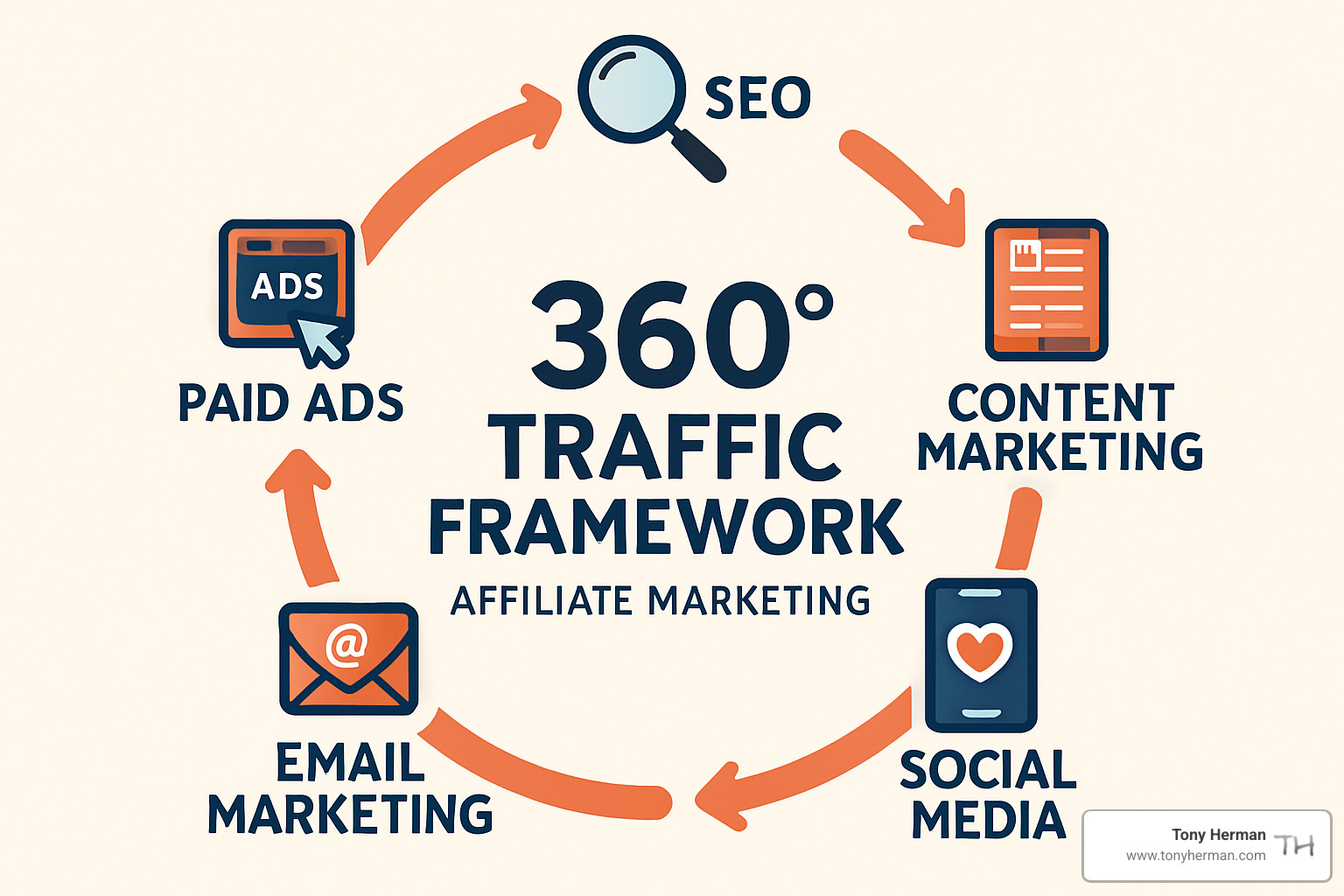
Depending on a single traffic source is gambling with your income. Google tweaks or social-media policy changes can wipe you out overnight. My 360° Framework spreads risk across four pillars:
- Content & SEO – the long-term foundation
- Social & Community – relationship and trust builder
- Email & Retention – traffic you own
- Paid & Scaling – the accelerator once offers convert
The pillars reinforce one another: your articles feed social posts, social feeds your list, and email boosts paid-ad ROI. Build the ecosystem and traffic never stops.
What Does “how to get traffic on affiliate website” Really Mean?
You’re not just chasing eyeballs—you’re looking for people ready to act on your recommendations. Focus on intent, relevance and trust; traffic without those three is just vanity.
Mastering Free & Organic Traffic Channels

Blog & SEO Engine
Start with keyword research (Ahrefs, SEMrush, or Google Keyword Planner), then publish reviews, “best X for Y” lists, and how-tos around those phrases. Optimize basics—title tag, meta description, headers, alt text and fast mobile load times. Internal links keep visitors exploring; a few authoritative backlinks move you up the SERPs. Expect a 3-6-month runway.
Product Reviews & Comparison Content
95 % of consumers read online reviews before buying. Be transparent about pros and cons, add original photos/video, and place FTC disclosures near your links.
Social Media Amplifiers
- Pinterest – evergreen pins still send traffic months later.
- Instagram – lifestyle storytelling; use a bio-link tool.
- TikTok – short, authentic demos; 71 % of users have bought after watching.
- Facebook Groups – build community first, promote later.
Communities, Forums & Q&A Sites
Answer questions on Reddit, Quora and niche forums. Provide real value, cite sources, then link to deeper content when appropriate. These evergreen threads rank well in Google and send qualified traffic for years.
Email Marketing Flywheel
Create a simple lead magnet, segment new subscribers, and nurture with a 3-5-email value series before any promotion. With 4 billion daily users and 3 800 % average ROI, email is the one channel you truly control.
Need more detail? See Get More Traffic Blogging and Social Media Strategy for Free Traffic.
Leveraging Paid & Hybrid Traffic Sources
Quick-Win Campaign Set-Up
Start small—$10-$20 per day. Send Google Ads traffic to intent-matched landing pages, not your homepage. On Facebook, install the pixel, use custom audiences, and A/B-test a few image/video creatives.
Native ads (Taboola, Outbrain) often earn 40 % higher CTR because they blend into publisher content—great for promoting articles rather than raw affiliate links.
Retargeting & Look-Alike Boosters
Warm visitors convert 3-5× better. Segment by page visited and show progressively stronger offers the longer they’ve been away. Once conversion data rolls in, clone your best buyers with look-alike audiences.
Balancing Budgets: Paid vs. Organic
Think of organic as planting trees and paid traffic as renting billboards. Most affiliates devote 70-80 % of early effort to SEO/content, then reinvest commissions into ads that have proven math (CPC < earnings per click).
Smart Paid Blends
Test multiple platforms with micro-budgets, comply with each policy, and remember: the goal isn’t just instant sales but growing your list and retargeting pools for cheaper future revenue.
Measure, Optimize & Stay Compliant

Key Metrics & Tools
Track sessions, traffic sources, bounce rate, pages per session, CTR on affiliate links and EPC. Google Analytics plus a heat-map tool (e.g. Hotjar) tells you what happens; split-testing tools show you why.
Trust & Authority Builders
Use clear FTC disclosures, transparent reviews, an engaging About page and visible social proof (comments, shares). Professional design and consistent publishing signal reliability.
Protection Against Fake Traffic & Click Fraud
Watch for sudden spikes, odd geos and 90 %+ bounce rates. Filter bots in Google Analytics, use click-fraud protection on paid campaigns and keep documentation for affiliate-network audits.
More tips: Costly Affiliate Marketing Mistakes.
Frequently Asked Questions about how to get traffic on affiliate website
What’s the fastest way to attract my first 1,000 visitors?
Publish 5-10 problem-solving posts targeting low-competition keywords, then actively share them on social, answer related questions on Quora/Reddit, and engage in a few niche Facebook groups. If you have $100 to test ads, use it to learn which headlines and topics pull the best response.
Should beginners start with paid ads or focus on SEO first?
Begin with SEO and content. It teaches you what resonates before you risk ad dollars and provides compounding traffic that keeps coming even when your budget pauses.
How many traffic sources should I tackle at once?
Master one or two channels first. After 60-90 days of consistent results, add another. Depth beats breadth—100 targeted visitors from one solid source are worth more than 500 random clicks from five.
Conclusion
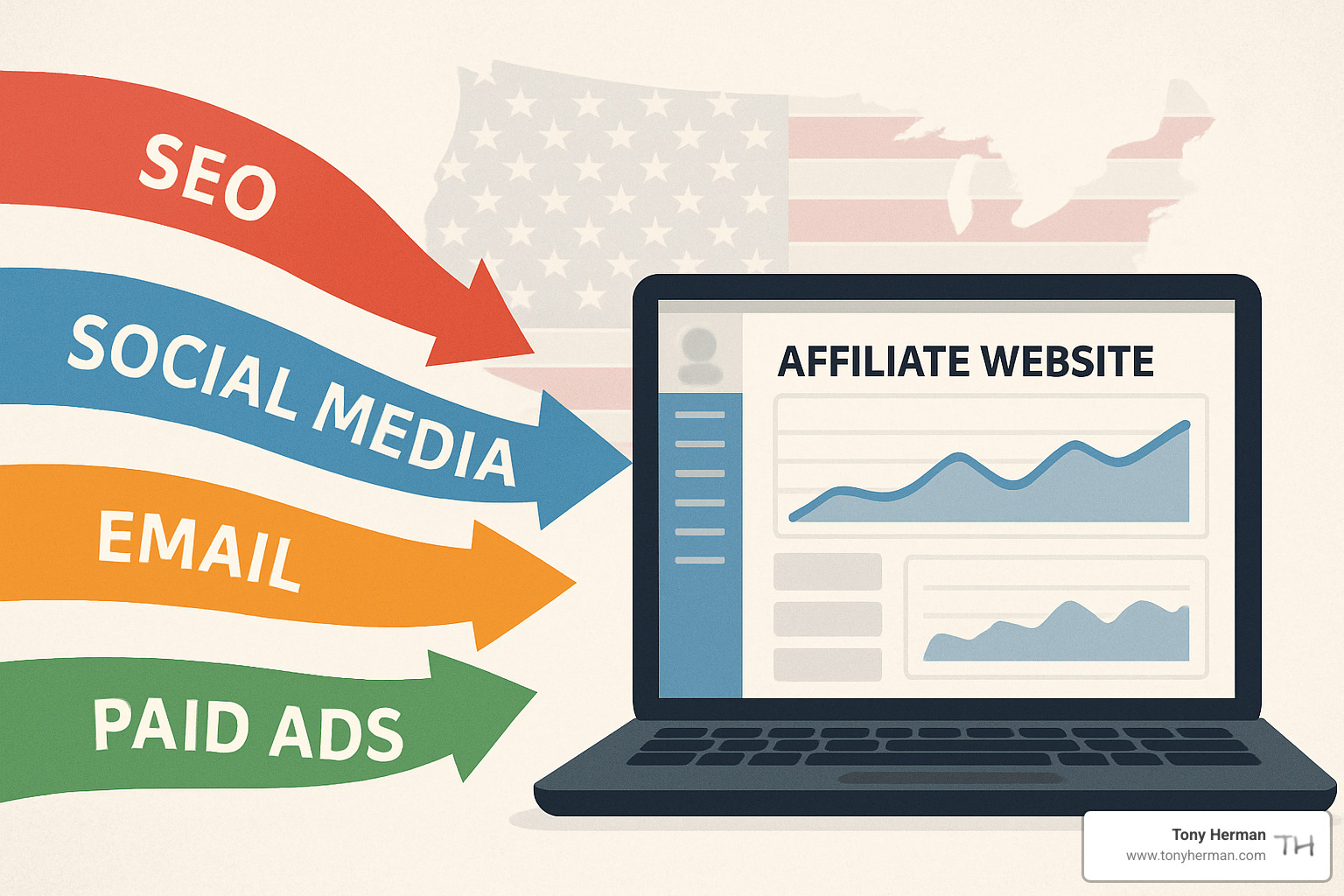
There’s no magic wand—just a repeatable system of SEO, social, email and ads working together. Plant your organic seeds, nurture trust, then scale with paid traffic once you know your numbers. Consistency beats shortcuts every time.
Start today: pick one tactic from this guide, implement it, and measure the results. Need a deeper dive? See Affiliate Marketing 101 and our guide to Costly Affiliate Marketing Mistakes.
Keep taking informed, incremental action—the traffic will follow.
📄 Download a PDF of This Article