I Built GoBeOutside.com Because Weather Apps Make Outdoor Planning Harder Than It Needs to Be

TL;DR Summary: I created GoBeOutside.com because basic weather forecasts often do not answer the real question: is this a good day for the activity I want to do? The site combines weather conditions, wind, rain timing, storms, and alerts into quicker outdoor activity summaries. It is starting in Wisconsin, with more locations and states planned as I gather feedback.
I spend a lot of time checking the weather before I head out to do something outside.
That might mean kayaking, hiking, golfing, biking, skiing, taking a drive somewhere scenic, or just trying to decide whether a day trip is worth it. And most of the time, getting the information I need means bouncing between a few different sources.
I might check one app for the general forecast, another for wind, another for radar, and then try to mentally piece together whether the conditions are actually good for the activity I have in mind.
That works. But it is more hassle than it should be.
I kept coming back to the same thought: why not have something that just tells you what you really want to know?

Not just, “It will be 74 degrees with a chance of rain.”
But: “Is this a good day to kayak?”
Or: “Should I golf in the morning instead of the afternoon?”
Or: “Is it too windy to be out on the water?”
That is what led me to build GoBeOutside.com.
Weather for the Plans You Actually Have
GoBeOutside is built around a simple idea: weather information should help people make a decision.
Most forecasts give you useful raw information, but they do not always connect it to the activity you are planning. A sunny day can still be a bad day for paddling if the wind is up. A warm afternoon may look perfect for golf until thunderstorms are expected later. A chance of rain may not matter much if the morning is dry and comfortable.
GoBeOutside looks at conditions like temperature, wind, rain timing, storms, and alerts, then turns that information into quick activity-focused summaries for places people want to visit.
The goal is not to replace official forecasts or tell anyone what they have to do. It is to make outdoor planning quicker and easier.
The First Real Test Was a Kayak Trip That Did Not Happen
A couple of days ago, I had one of those moments that made the whole project feel real.
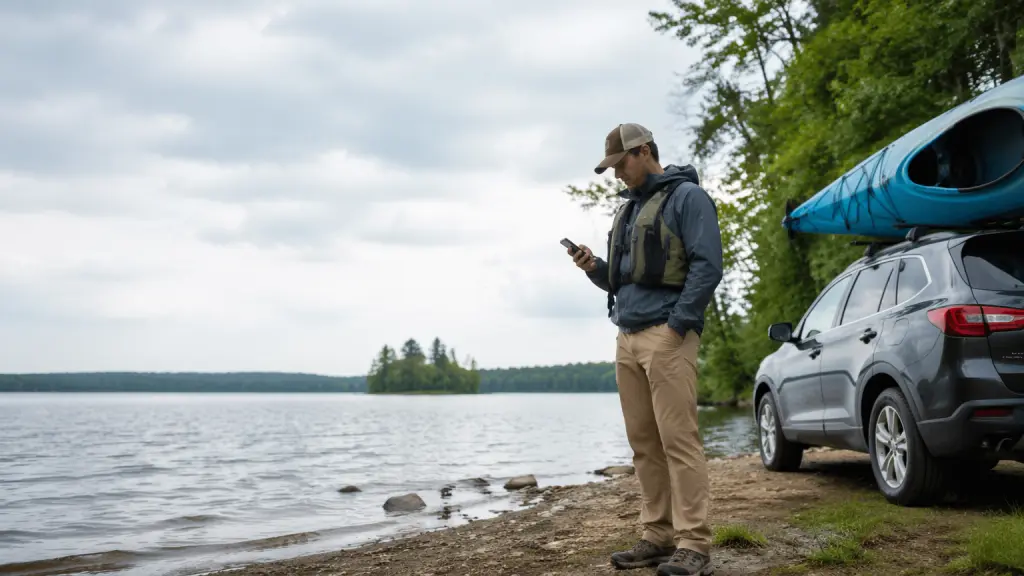
I had my kayak packed up. I drove about an hour to get to where I wanted to paddle. But once I got there, the weather was not cooperating, and we decided to bail on the trip.
That part was disappointing. I had been looking forward to kayaking.
But GoBeOutside was already running, so it also gave me a chance to see whether the data and activity advice were actually useful in the real world.
The site said kayaking was not recommended.
And it was right.
So yes, I was disappointed that we did not get out on the water. But I was also glad that the site did exactly what I hoped it would do: help someone avoid forcing an outdoor plan that was no longer a good fit for the conditions.
Why I Started With Wisconsin
I live in Wisconsin, and it is where I do most of my outdoor recreation. I know the state well, from lakes and river towns to bluff country, hiking spots, Northwoods destinations, camping areas, golf courses, and day-trip places.
That made Wisconsin the obvious place to start.
It is also a great test market for this kind of site. Wisconsin has a lot of different outdoor activities packed into one state, and the weather can make a big difference depending on what you are trying to do and where you are going.
Right now, GoBeOutside includes destination pages for places such as Madison, Wisconsin Dells, Devil’s Lake, Door County, La Crosse, Minocqua, Lake Wisconsin, and more. Each page gives people a quick outdoor outlook, activity conditions, and a forecast designed to be more useful than a basic weather icon.
Going forward, I can see expanding into other states that I know well or spend time in, including Michigan and possibly Colorado.
Yes, I Used AI. But It Is Not Just “Vibe Coding.”
I used AI as part of building GoBeOutside, and it has made the process much faster.
But I also think there is an important distinction between asking AI to make something and actually knowing how to build, evaluate, improve, and maintain a real web product.
I have been building websites and web-based tools for more than 25 years, working with a team and solving real business and technical problems along the way. AI can speed up the work, help generate starting points, and make iteration faster. But the experience still matters.
Because I understand code, web development, data structure, user experience, and how websites actually work after launch, I can direct the AI more effectively and step in when something needs to be changed, fixed, or improved.
To me, AI is not replacing the work. It is helping make the work move faster.
This Is the MVP
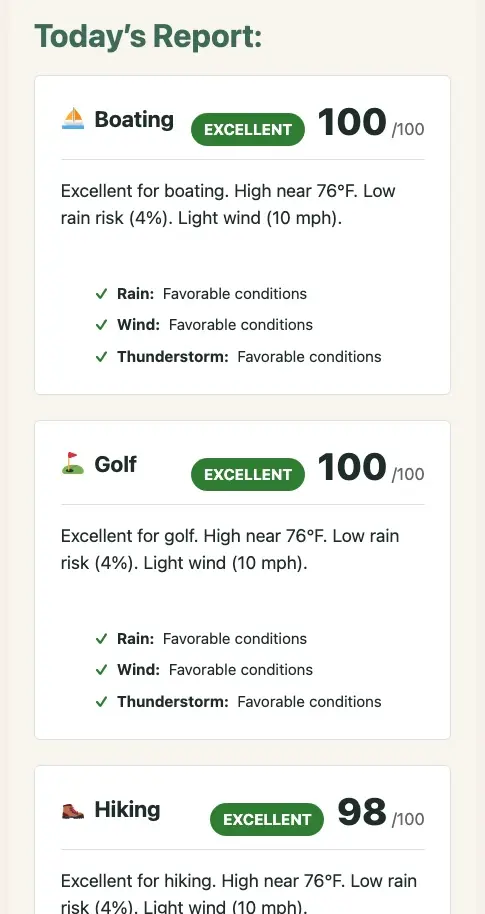
GoBeOutside is still an MVP: a minimum viable product.
That means the core idea is live, the site is useful now, and I can start learning from real people using it. I want to see what visitors find helpful, what activities or locations they want next, and where the summaries can become even more useful.
I showed the site to a friend recently, and his reaction was simply: “You are amazing.”
That was encouraging, of course. But what I really hope is that people use it before their next hike, lake day, kayak trip, golf outing, camping weekend, family outing, or road trip and think, “This made planning easier.”
That is the point.
And my brother also said that “go touch grass” is trending, so this happens to fit in just right with that… nice.
You can check it out at GoBeOutside.com.
📄 Download a PDF of This Article